request to quote
Leave Your Message

7 Tips for Choosing a WRAS Butterfly Valve?

Choosing a WRAS Butterfly Valve is a water-safety decision, not merely a purchase based on diameter or price. The valve sits inside a real network, facing pressure changes, treated water, sediment, temperature shifts, and repeated operation. Small mistakes can become visible leaks.

Ofwat’s 2022–23 water-company data recorded approximately 3.2 billion litres of leakage daily across England and Wales. That figure gives valve selection practical weight. Meanwhile, WRAS approval confirms that suitable products meet UK water-contact requirements. It does not prove that every valve fits every installation. BS EN 1074-2, pressure class, liner material, disc design, actuator compatibility, and maintenance access still require careful review.

Valve specialist Philip L. Skousen, author of Valve Handbook, offers a useful principle: “The right valve is selected for the service, not simply for the line size.” That sentence deserves attention. A DN200 pipeline may still need different materials, torque ratings, or sealing arrangements.

This guide examines seven decisions that engineers and buyers should check before ordering a WRAS Butterfly Valve. The list includes approval scope, operating pressure, water chemistry, installation position, control method, lifecycle cost, and supplier evidence. Field experience suggests that catalogues rarely show the whole picture. Sometimes, the missing detail matters most.

Look beyond the badge.

The best choice balances compliance, reliability, hydraulic performance, and future maintenance. It should also withstand honest questioning: Is the approval current? Is the certificate relevant? Can replacement parts arrive quickly? These questions sound basic. They are not.
7 Tips for Choosing a WRAS Butterfly Valve?

Understand WRAS Approval and Its Importance in Water Systems

7 Tips for Choosing a WRAS Butterfly Valve?

Understanding WRAS approval matters when selecting a butterfly valve for drinking water systems. WRAS approval indicates that a product or material meets specific UK water regulations requirements. It helps reduce contamination risks from wetted components, coatings, seals, and lubricants. That protection depends on the exact approved configuration, not merely the valve’s general description. Approval is not a universal quality certificate. This distinction is often missed.

Check the current WRAS listing and confirm the exact valve size, materials, and approval scope. Review the seal compound and disc coating, especially where water may remain stagnant. Match pressure, temperature, and flow conditions with the system design. Confirm the valve suits potable water contact, not only industrial service. Ask for approval documents, installation instructions, and maintenance requirements. Inspect the actuator and shaft arrangement for reliable isolation and future servicing. Verify local regulations, because WRAS approval may not replace project-specific obligations.

On site, a valve can look correct while carrying an unsuitable seal specification. Examine seals before installation and prevent dirt entering the valve body. A clean flange face and correct bolt tightening can matter as much as the certificate. It is easy to assume approval removes every risk. It does not. Water chemistry, dead legs, incorrect storage, and poor maintenance still affect performance. Record the approval reference with commissioning documents, and check its status before procurement.
Check Valve Materials for Water Safety and Long-Term Durability

Choosing a WRAS butterfly valve requires more than comparing size and price. Materials determine water safety, service life, and maintenance risk. WRAS approval confirms that wetted components meet UK requirements for drinking-water contact. However, approval alone does not guarantee suitability for every site.

A practical material check starts with the valve body, disc, stem, liner, and seals. Ductile iron with a certified protective coating can suit many distribution systems. Stainless steel may resist corrosion better, but water chemistry still matters. EPDM seals are common in potable-water applications, yet the exact grade must be approved for contact water. A stainless disc is not automatically safer.

The WHO and UNICEF Joint Monitoring Programme reported that 2.2 billion people lacked safely managed drinking water in 2022. That figure highlights the importance of preventing contamination at every connection. The US EPA’s 2023 Drinking Water Infrastructure Needs Survey estimated $625 billion in investment needs over twenty years. Durable valve materials can reduce replacement work, but only when selected for pressure, temperature, chlorine exposure, and installation conditions.

Check the certificate.

Also inspect coating damage, stem sealing, and flange compatibility before commissioning. Small defects become expensive later. I would still question any specification that lists “corrosion resistant” without naming the material, coating system, or test standard. A careful WRAS selection should combine documented approval, chemical compatibility, and evidence from comparable water networks.

Match the Valve Size, Pressure Rating, and Operating Conditions

7 Tips for Choosing a WRAS Butterfly Valve?

Tip 1: Match the valve diameter to the pipe and required flow. A larger valve is not automatically better. Oversizing can reduce control accuracy and create unstable flow. Tip 2: Check the pressure rating against both normal and surge pressure. Leave a practical safety margin. Tip 3: Confirm the valve suits the operating temperature and fluid. Drinking-water systems still need careful seal selection.

Tip 4: Review WRAS approval for the complete wetted configuration, not only the valve body. Liner and disc materials can affect compliance and service life. Tip 5: Consider the installation space. A wafer, lugged, or flanged design may suit different pipe layouts. Allow room for bolt access and actuator movement. Tip 6: Select manual, electric, or pneumatic operation according to cycle frequency. Frequent operation needs reliable torque and clear position feedback. Tip 7: Check the valve’s shutoff performance before ordering. A valve that fits the pipe may still leak under real conditions.

I have seen projects focus on nominal size and overlook flow velocity. That mistake caused noise and premature wear. It is also wise to verify flange standards, ambient conditions, and maintenance access. Ask for pressure-test records and material documentation. Do not assume every WRAS butterfly valve handles the same duty. Operating data should guide the final choice.

7 Tips for Choosing a WRAS Butterfly Valve? - Match the Valve Size, Pressure Rating, and Operating Conditions
Tip Selection Dimension What to Check Recommended Selection Approach Typical Application Example
1 Confirm WRAS suitability Verify that the valve is suitable for use with wholesome or drinking water and that the relevant wetted materials and elastomers have current approval documentation. Request approval details for the complete valve configuration, including the body liner, seat, shaft seals, and any wetted coatings. Check the approval scope before installation. A potable-water isolation valve for a building service line should use approved water-contact materials rather than components intended only for industrial water.
2 Match the nominal valve size Compare the required pipe size, flange standard, face-to-face dimension, flow capacity, and available installation space. Select a valve with the same nominal diameter as the connected pipe unless a hydraulic calculation supports a different size. Confirm compatibility with PN 10 or PN 16 drilling where applicable. For a DN100 pipeline, a DN100 butterfly valve normally provides the simplest installation and avoids unnecessary reducers or flow disturbances.
3 Check pressure rating Establish the maximum working pressure, pump shut-off pressure, static pressure, and possible surge or water-hammer conditions. Choose a pressure class that exceeds the highest calculated system pressure. Common water-service options include PN 10 and PN 16, subject to the valve design and temperature. If the maximum system pressure is 10 bar including transient effects, a PN 16 valve may provide a suitable engineering margin when the complete piping system is also rated accordingly.
4 Evaluate operating temperature Consider the normal temperature, maximum temperature, minimum temperature, and any temperature changes during disinfection or maintenance. Select a seat and seal material whose temperature range covers the actual service conditions. Temperature can reduce the allowable pressure rating of some valve materials. A cold-water distribution system typically operates near ambient temperature, while hot-water service requires confirmation that the selected elastomer and valve construction are suitable.
5 Select the correct body and seat materials Assess water quality, corrosion risk, disinfectant exposure, installation environment, and compatibility with adjoining pipework. For many water applications, ductile iron bodies with approved resilient seats are commonly considered. Use corrosion-resistant shaft and fastener materials where moisture or external exposure is significant. An underground potable-water line may require a corrosion-protected body, approved seat material, and suitable external coating for soil and moisture conditions.
6 Choose the operating method Decide whether the valve will be operated manually, electrically, pneumatically, or through an automated control system. Use a lever for smaller, infrequently operated valves; a gearbox for larger sizes or higher operating torque; and an actuator when remote control, modulating service, or automatic shutdown is required. A DN250 valve in a plant room may be fitted with a gearbox, while a remotely controlled treatment-process valve may require an actuator with position feedback.
7 Review flow, control, and maintenance needs Check the expected flow rate, pressure drop, velocity, throttling frequency, installation orientation, accessibility, and future maintenance requirements. Use a butterfly valve primarily for isolation or moderate control where its flow characteristics are appropriate. Confirm that the selected valve can be inspected, operated, and removed safely. A valve used mainly for isolation in a pumping station can be sized for the pipeline flow, while frequent throttling may require a control-valve assessment and a detailed cavitation review.
Practical reminder: Final selection should be verified against the approved product documentation, applicable piping standards, system design pressure, operating temperature, flow calculations, and local drinking-water requirements.

Compare Butterfly Valve Designs, Seals, and Actuation Options

7 Tips for Choosing a WRAS Butterfly Valve?

A WRAS butterfly valve should match the water system, not just the pipe diameter. Check the approval certificate and confirm it covers the exact valve materials, seal compound, pressure range, and intended potable-water use. Approval wording can be overlooked. That creates avoidable risk. Compare wafer, lug, and flanged designs against installation access. Wafer valves suit compact spaces and fit between flanges. Lug valves allow more flexible maintenance on some layouts. Flanged designs provide stronger alignment but require more room and accurate bolt control.

Seal Selection Seal selection deserves close attention. Certified EPDM is commonly used for drinking-water service, but not every EPDM formulation has the same approval. Check temperature limits, disinfectant exposure, and compatibility with the treated water. A resilient seat usually offers tight shutoff at a practical cost. Metal-seated designs may tolerate harsher conditions, yet they can require higher torque and may not provide identical bubble-tight performance. This is where specifications sometimes look clearer than reality.

Actuation and Torque Actuation changes operating safety and maintenance effort. A hand lever works for smaller valves and occasional isolation. A gearbox improves control on larger diameters. Electric or pneumatic actuators suit frequent cycling and remote operation. Specify fail-safe behavior, feedback signals, operating speed, and available torque. Never select an actuator from valve size alone. Actual torque can increase with pressure, infrequent operation, or seat friction. Site conditions often expose this mistake. Allow a sensible torque margin, but avoid excessive sizing, which can damage the stem or seat.

Verify Installation Support, Testing, Documentation, and Maintenance Needs

7 Tips for Choosing a WRAS Butterfly Valve?

Verify installation support before approving a WRAS butterfly valve. Ask for torque values, flange guidance, bolt patterns, and pipe alignment limits. Clear instructions reduce site errors. They also help contractors avoid stressing the valve body. Installation support should include commissioning advice, not only a downloadable drawing. A practical weakness remains: many teams check approval certificates but overlook access for future servicing.

Testing evidence deserves equal attention. Request pressure-test records, seat-leakage results, and batch traceability. ISO 5208 provides recognised leakage-rate classifications for industrial valves. EN 1074-2 covers isolating valves used in water-supply systems. These standards are useful, but they do not replace project-specific acceptance tests. The WHO/UNICEF JMP 2023 report estimates that 2.2 billion people lacked safely managed drinking water in 2022. Reliable isolation therefore protects more than equipment.

Documentation should identify the exact valve size, materials, approval scope, and installation limits. Confirm that elastomers and coatings suit potable-water contact. Keep certificates with commissioning records and maintenance history. Maintenance planning must include actuator access, inspection intervals, spare seals, and safe isolation points. Ofwat’s Water Company Performance Report 2023-24 treats leakage as a key operational measure, showing why small failures deserve attention. The paperwork can feel excessive. It often exposes missing decisions before they become expensive repairs.

7 Tips for Choosing a WRAS Butterfly Valve

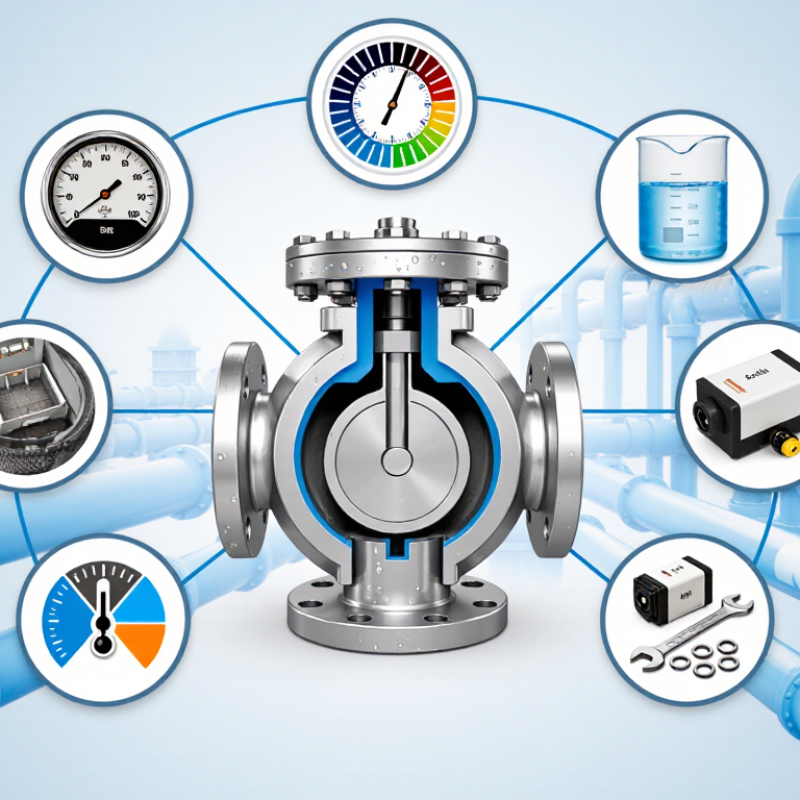
Suggested evaluation weighting for installation support, testing, documentation, compliance, and long-term maintenance requirements.

Use these percentages as a practical comparison framework. Confirm WRAS approval, pressure ratings, materials, test certificates, installation guidance, and maintenance requirements against the project specification before purchase.