The 2026 Top EN1074 Butterfly Valve Manufacturers Guide examines suppliers serving modern water transmission and distribution projects. Demand is becoming more demanding. Aging pipelines, stricter leakage controls, and expanding treatment networks require valves that perform beyond catalogue claims.
The United Nations World Water Development Report 2024 links water security with resilient infrastructure and economic stability. WHO and UNICEF’s Joint Monitoring Programme reported that 2.2 billion people lacked safely managed drinking water in 2022. These figures give valve selection a practical meaning. A failed En1074 Butterfly Valve can interrupt supply, increase repair costs, and expose operators to avoidable operational risks.
This guide compares manufacturers through measurable evidence. Key criteria include EN 1074 compliance, pressure-class testing, sealing performance, material traceability, coating quality, and documented factory controls. EN 1074-2 remains particularly relevant for butterfly valves used in water-supply systems. Certificates alone are not enough. Test reports, inspection records, and field experience deserve closer attention.
Market studies from Grand View Research and Fortune Business Insights identify continued growth in industrial and water infrastructure valve demand. However, market size does not prove product reliability. A larger supplier may still provide inconsistent after-sales support. A smaller manufacturer may offer stronger engineering attention. This is where the review becomes less certain. Public data can be incomplete, and rankings may change by region, application, and project specification. Therefore, the guide focuses on verifiable performance rather than promotional visibility. Readers will find practical comparisons for selecting dependable En1074 Butterfly Valve manufacturers in 2026. Real projects are rarely perfect. The best decision balances standards, evidence, service, and operating conditions.

EN1074 butterfly valves are quarter-turn devices used to control water flow in supply networks. The EN1074-2 standard addresses functional requirements for these valves. Their compact body reduces installation space, especially inside underground chambers. A circular disc rotates around a shaft and regulates passage through the pipeline. Resilient seats can provide tight shutoff under suitable pressure conditions. A practical detail matters. The seat material must match the water quality, temperature, and operating cycle.
Valve operation depends on torque, pressure, and disc position. Manual gearboxes support controlled adjustment on larger pipelines. Electric or hydraulic actuators allow remote operation in treatment plants and pumping stations. Clear position indicators help technicians confirm whether the valve is open, closed, or partly throttled. Butterfly valves often serve isolation duties more reliably than frequent throttling. Continuous throttling may increase turbulence, wear, and operating torque.
Applications include potable water mains, reservoirs, wastewater facilities, and fire-protection networks where permitted by project requirements. During field inspections, technicians should check flange alignment, shaft seals, gearbox movement, and unexpected leakage. Incorrect alignment can damage the seat before commissioning. The standard improves consistency, but it cannot correct poor installation. That remains a common weakness. Engineers should also review pressure ratings, coating systems, buried-service protection, and actuator fail positions. In some projects, the most expensive failure begins with a small installation shortcut.
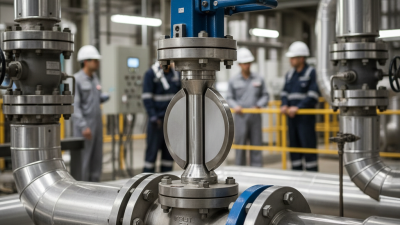
The 2026 EN1074 Butterfly Valve Manufacturers Guide should begin with compliance, not catalogue claims. EN 1074-1 defines general requirements for water-supply valves, while EN 1074-2 covers isolating valves, including butterfly designs. Buyers should request documented pressure testing, seat-tightness results, operating-torque data, and traceable material records. ISO 5208 testing can support leakage verification, but it does not replace EN 1074 compliance.
Certification must match the installation. A valve intended for drinking water may need national contact-material approval under the EU Drinking Water Directive 2020/2184. CE marking is not automatically created by EN 1074; applicability depends on other legislation, such as the Pressure Equipment Directive. The WHO/UNICEF JMP 2023 report estimated that 2.2 billion people lacked safely managed drinking water services. That figure shows why small sealing failures matter in real networks. Still, paperwork alone is not proof. Factory audits, accredited laboratory reports, batch traceability, and witnessed testing provide stronger evidence. Some specifications remain vague, and manufacturers should explain those gaps rather than hide them.
Tips: Check the exact EN 1074 part, PN rating, temperature range, coating system, and valve orientation. Ask for the latest test report, not a recycled certificate. Confirm whether the elastomer is approved for potable water. Field records should include serial numbers, torque readings, and commissioning photographs. A practical review may reveal an uncomfortable issue: the cheapest compliant valve can become expensive when access, corrosion, or actuator failure is ignored.
Evaluating butterfly valve manufacturers in 2026 requires more than comparing prices and catalog photographs. Check whether the manufacturer understands EN 1074 requirements for water supply applications, pressure performance, sealing, and durability. Ask for current certificates, inspection plans, material records, and test reports linked to actual production batches. Generic documents are not enough.
A reliable manufacturer should explain how each valve is designed, machined, coated, assembled, and tested. Request evidence of hydrostatic testing, leakage inspection, dimensional checks, and shaft alignment control. Factory experience matters when valves operate in buried chambers, pumping stations, or corrosive water environments. Ask to review sample traceability from raw material to final shipment.
Look closely.
Audit the production site if possible. Observe storage conditions, calibration labels, machining discipline, and how rejected parts are controlled. A capable technical team should answer questions without hiding behind sales language. Service support also deserves attention, including installation guidance, spare parts, warranty handling, and response times.
Some suppliers appear excellent on paper but provide weak batch-level evidence. I have found that small details, such as unclear coating thickness records, can reveal larger quality risks. No evaluation is perfect. Buyers should document assumptions, compare test methods, and reassess suppliers after real operating feedback. The lowest quotation may become expensive when seals fail early or delivery records remain incomplete.
2026 Top EN1074 Butterfly Valve Manufacturers Guide
Top EN1074 butterfly valve manufacturers distinguish themselves through verified engineering, not polished catalogs. EN 1074-2 covers butterfly valves for water supply systems, including pressure performance and functional requirements. Strong manufacturers control casting, machining, elastomer selection, and final testing in one traceable process. Their valves often use ductile iron bodies, corrosion-resistant coatings, and replaceable liners. These details matter inside damp valve chambers.
Independent testing is a major strength. Manufacturers with serious quality systems document shell tests, seat tests, torque measurements, and cycle performance.
The World Bank estimates that non-revenue water exceeds 126 billion cubic meters annually, costing utilities about 39 billion US dollars each year. Poor valve sealing contributes to this problem. Small leakage becomes expensive.
Manufacturers serving large utilities also provide sizing support and actuator compatibility. They check operating torque against pressure, temperature, and pipeline conditions. That sounds basic. It is not always done well. A low purchase price may hide weak coating thickness, incomplete material records, or difficult maintenance access.
I would request certificates, test curves, inspection plans, and field references before approval. The WHO and UNICEF Joint Monitoring Programme reported that 2.2 billion people lacked safely managed drinking water in 2022. Reliable valve production therefore supports infrastructure with real human consequences, not only industrial specifications.
Selecting an EN1074 butterfly valve manufacturer requires more than checking a certificate. The project should begin with pressure class, pipe diameter, water quality, temperature, and installation conditions. A DN600 valve in a buried chamber needs different planning from a smaller valve inside a treatment plant. Confirm flange dimensions, face-to-face length, actuator torque, and available maintenance space before approval.
Performance evidence should include documented pressure tests, leakage results, coating specifications, and material traceability. Ask how the manufacturer controls shaft alignment, seat quality, and disc balance during production. These details affect operating torque and sealing after repeated cycles. Request drawings, inspection records, and clear instructions for manual or powered actuation. Vague answers deserve attention.
Long-term reliability depends on service support as much as initial design. Review spare-part availability, corrosion protection, storage guidance, and response procedures for field problems. A reliable manufacturer can explain failure risks without hiding limitations. Do not assume a higher price guarantees better service. It may not. I have seen projects focus heavily on EN1074 compliance while overlooking chamber drainage and actuator access. That mistake can delay maintenance for years. A practical selection process combines standard compliance, verified testing, installation experience, and honest technical discussion. Performance must remain measurable after commissioning, not only impressive on paper.